
Have you ever felt like your small business is invisible while big corporations dominate the living room screen? I have watched many owners struggle with pricey marketing that fails to deliver real results. But youtube connected tv ads changed the game for my clients seeking affordable home reach.
Most people think television advertising is too expensive for a modest budget. However, ctv advertising allows you to reach viewers right where they are most relaxed. This modern advertising method puts your story on the biggest screen in the house for a fraction of the cost.
Data shows a massive 96% completion rate for this video format. Compare that to just 60% for typical mobile placements. People enjoy high-quality content on big screens, which builds brand awareness much faster than traditional social media.
As streaming services grow, smaller brands can finally compete without spending millions. It is an exciting time to grow your presence. I will show you how to navigate this space and see real results.
Key Takeaways
- Reach over 39 million American households currently using these platforms.
- Enjoy 96% video completion rates compared to much lower mobile averages.
- Start with flexible budgets that are far cheaper than traditional cable television.
- Capitalize on a 22% increase in total market spending for this year.
- Build stronger brand recognition by appearing on the main household screen.
- Target specific audiences accurately while they watch their favorite creators.
What Are YouTube Connected TV Ads
When I talk to small business owners about youtube connected TV, I usually start by defining what it actually looks like on a living room wall. It isn’t just a video on a phone; it’s a full-screen experience that blends digital precision with the impact of traditional television. This technology bridges the gap between old-school commercials and modern data-driven targeting.
I’ve found that many entrepreneurs are surprised by how accessible this high-impact space has become for modest budgets. Major manufacturers like Samsung and LG were early adopters, making it easy for anyone with a smart television to access the app. Today, this ecosystem includes everything from specialized streaming services like Roku to the widely used YouTube TV interface.
How CTV Ads Appear on Big Screens
I’ve seen how these ads appear on devices like Samsung and LG smart TVs. They also run through Apple TV boxes and gaming consoles that people use every day. When I set up these campaigns, the ads play during video content while people relax on their couches.
This creates a “lean-back” experience where your message feels like a standard TV commercial but costs much less. The environment is naturally social, as family members often watch together in a shared space. I emphasize to my clients that this context completely changes how people respond to your brand compared to a distracted mobile scroll.
Who Watches YouTube on Home Devices
I tell my clients that this shift is massive because over 34% of adult YouTube usage now happens on a television screen. For children, that number jumps to 45% as they browse their favorite channels. Different platforms show that viewers stay engaged for varying lengths of time depending on the category.
| Content Category | Primary Device | Average Watch Time |
|---|---|---|
| Gaming Streams | Smart TV | 24 Minutes |
| Music Videos | Streaming Box | 7 Minutes |
| YouTube Originals | Gaming Console | 22 Minutes |
I’ve found that gaming content averages over 24 minutes, providing a huge window for your message to land. Meanwhile, music videos keep viewers occupied for under 7 minutes. Understanding these viewing habits helps me tailor where a small business should place its budget for the best results.
Why YouTube Connected TV Ads Work for Small Businesses
I used to think that television advertising was only for big brands with massive budgets. That changed when I saw how small businesses use YouTube CTV to reach their local market effectively.
It is a smart way to get your brand on the biggest screen in the house without breaking the bank. I’ve noticed that when you appear on a home television, you gain instant authority and trust with your audience.
Switching to a living room strategy changes how customers see your brand compared to standard digital ads. You aren’t just a small icon on a phone; you are a professional presence in their home.
96% Video Completion Rates Compared to Other Placements
I have managed campaigns where completion rates hit a staggering 96% on CTV. Compare that to the 50-60% we often see on mobile or desktop devices.
This happens because people are usually settled in and comfortable when they watch TV. They are much less likely to click away or scroll past your message while they are relaxing.
The high completion rate means your potential customers actually hear your full story. You only pay when people watch, which makes these ads incredibly efficient for your budget.
Viewers Spend Nearly Two Hours Daily on CTV Devices
The average US adult now spends about 1 hour and 51 minutes of time daily on Connected TV. This gives you a massive window to capture their attention during their favorite shows.
Data from Q1 2024 shows that viewing sessions on these platforms last 29% longer than other placements. These longer sessions lead to better performance because viewers are truly engaged with the content.
When people sit down to watch a series, they are in a “lean-back” mode. This mindset makes them more receptive to your message than when they are quickly browsing social media.
Lower Entry Costs Than Traditional TV Advertising
Traditional local TV spots can easily cost over $10,000, which is out of reach for many. However, I’ve helped clients start with budgets under $1,000 while still getting high-quality impressions.
You can even follow a how to advertise on YouTube TV guide to set up your campaign and keep costs low. This democratizes the screen, letting small players compete with national giants for the same viewing audience.
Small businesses now get access to television-quality advertising without the production costs that blocked them before. Viewers see your brand as a major player, regardless of your actual office size.
| Metric Comparison | Mobile & Desktop | Connected TV (CTV) |
|---|---|---|
| Typical Completion Rate | 50% – 60% | Up to 96% |
| Average Daily Usage | Fragmented | 1 Hour 51 Minutes |
| Ad Engagement Level | Low (Easy to skip) | High (Lean-back mode) |
| Minimum Entry Cost | Low | Low (Under $1,000) |
How YouTube Connected TV Ads Differ from Mobile and Desktop Ads
I’ve noticed that many small business owners treat TV ads like mobile ads, which is a huge mistake. The way we consume media on a smartphone is fast and often very distracted. In contrast, the living room experience is relaxed and focused.
When you run a campaign on a television, you are reaching people in a “leaned-back” state. They aren’t looking to swipe away to the next post immediately. This shift in mindset changes how your brand is perceived from the very first second.
Viewing Environment Creates Higher Engagement
When people watch on a CTV, they are usually settled in on a couch, sometimes with their family. They give your ads their full attention because they aren’t scrolling through a social feed or multitasking. This specific environment leads to a much higher engagement rate than what you see on a handheld device.
I have found that 70% of CTV impressions use the 30-second non-skippable format. This means viewers see one full video instead of two shorter ones that they might ignore. Because they cannot easily skip or minimize the screen, your business message actually gets seen completely.
Ad Format Requirements for Big Screen Display
Your creative needs to look professional on a big screen to be effective. I tell my clients that visual storytelling is more important than tiny text that no one can read from across the room. The viewing habits on TV mirror traditional television, so people expect a high-quality experience.
The home environment creates a space where people tolerate ads as part of the content consumption. They are not looking to click away quickly or hunt for a skip button. This shift in attention is exactly why your brand stays in their mind longer, driving the engagement you need for growth.
| Feature | Mobile and Desktop | Connected TV (CTV) |
|---|---|---|
| User Intent | Quick browsing and scrolling | Leaned-back entertainment |
| Ad Completion | High skip and drop-off rates | High non-skippable completion |
| Creative Focus | Text-heavy and clickable | Visual storytelling and impact |
“Success in TV advertising isn’t about the size of your budget, but the quality of the connection you make in the viewer’s living room.”
Setting Up Your First YouTube Connected TV Ad Campaign
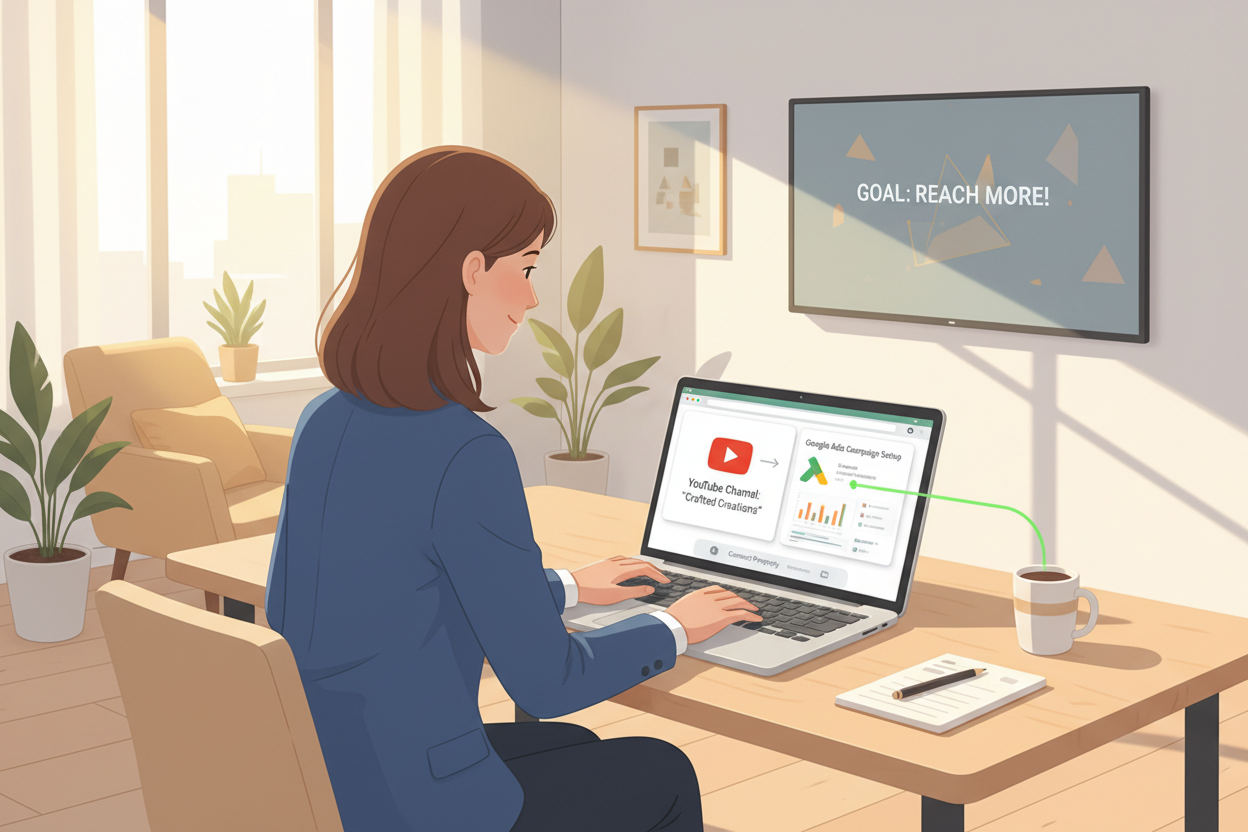
I will walk you through the simple steps to get your brand onto the big screen. Many people feel overwhelmed by the technical side, but the process only takes about 20 minutes. You just need your creative assets ready and a clear idea of who you want to reach with your campaign.
Creating Your Google Ads Account and Linking YouTube
The first step is accessing or setting up your Google Ads account to manage your advertising. You must link your YouTube channel to your account to unlock data from people who already watch your content.
This connection allows for advanced machine-learning analysis of your current audience. These insights help create a customized media plan that maximizes your budget with enhanced efficiency.
Selecting Connected TV as Your Target Placement
When building your campaigns, you must choose where your content appears. I always select Connected TV as a specific placement target rather than letting Google pick every screen.
Viewing habits on a television differ significantly from those on a mobile device. This manual targeting ensures your message reaches families when they are relaxed and focused on the large screen.
Video Specifications and Upload Requirements
Your video specifications matter for a high-quality viewer experience on a large display. I recommend using a 1920×1080 resolution minimum in MP4 or MOV format.
Upload your video to YouTube as an “unlisted” file first so it remains private. You can then reference that specific link when you are creating your ads in the dashboard.
Setting Your Initial Budget and Bid Strategy
I suggest a starting budget of $20 to $50 daily for your first campaigns. This amount gives you enough data to see results without risking too much money upfront.
Your bid strategy should start with Maximum CPV (cost per view). This allows you to control exactly what you pay for each view across different platforms. I have found that targeting accuracy improves quickly once Google processes your channel data.
Targeting Options for Small Business Budgets
I have found that the right targeting strategy can turn a tiny ad spend into a significant growth engine. Many small advertisers fear their money will disappear into the void without any results. However, the high precision available today ensures your campaigns reach only the most relevant audience.
Modern tools allow you to focus on people who actually care about your offer. This means you stop paying for views from people who will never buy from you. By being smart with your settings, you can compete with much larger companies.
Remarketing to Previous Website Visitors on Their TVs
I always start small business campaigns with remarketing because it focuses on warm leads. It delivers the best performance for limited budgets by showing ads to people who already know your name. You can reach previous website visitors while they relax and watch YouTube on their big screens.
This creates a powerful reminder of local brands in a comfortable, high-impact environment. Strategic positioning keeps your business top-of-mind during the decision-making process. Savvy advertisers use this method to turn “maybe later” into a confirmed sale.
Demographic and Interest Targeting Options
You can specify age ranges, household income, and parental status to match your ideal customer profile. I also use interest targeting to reach people based on the specific content they enjoy watching. If you sell fitness products, you can choose a qualified audience that actively watches workout videos.
This level of precision means your targeting efforts are never wasted on uninterested viewers. You can even target people based on the type of television they own or the apps they use. It allows you to build a marketing funnel that moves viewers from awareness to consideration.
Geographic Targeting for Local Service Businesses
Geographic targeting is a lifesaver for local service businesses like plumbers or boutiques. You can limit your local campaigns to specific zip codes, cities, or a radius around your shop. This ensures your audience is physically close enough to visit your store or book a service.
It provides valuable insights into which neighborhoods respond best to your video messages. You don’t have to pay for views in a city three hours away. This keeps your costs low and your lead quality very high.
Building Custom Audiences from Your Customer Data
You can build custom audiences using your own customer data, such as email lists. This allows you to reach existing customers with new offers or special upsell messages on their TV screens. I have even seen success by reaching audiences who have visited competitor websites recently.
Using this performance data helps you find more people who look just like your best customers. You can combine multiple options to create highly qualified audiences that convert at higher rates. Before you dive in, follow this how to advertise on YouTube TV guide to set up your account properly.
| Targeting Type | Best For | Main Benefit |
|---|---|---|
| Remarketing | Past Visitors | Higher Conversion |
| Geographic | Local Services | Reduced Waste |
| Interest-Based | Niche Products | Better Engagement |
Smart targeting ensures your small budget works as hard as you do every single day. Never settle for broad settings that drain your wallet without bringing in new customers. Success comes from finding your specific tribe in a sea of viewers.
Choosing the Right Ad Length for Connected TV
I have experimented with various video lengths, and I found that timing is everything when it comes to capturing viewer interest. The right choice always depends on what you want the viewer to do after seeing your content. I often see business owners struggle to decide between a short clip and a longer story.
The latest data from the Q1 2024 YouTube report provides a clear roadmap for our decisions. It shows that timing influences both views and how long people stay tuned in. Choosing the wrong length can lead to wasted budget and missed opportunities for your business.
15-Second Ads Generate the Highest View Rates
I have tested every duration from 6 seconds to 90 seconds. The Q1 2024 data confirms that 15-second ads consistently generate the highest view rates. This short format is incredibly effective because it delivers a quick punch before anyone thinks about looking away.
Short 15-second videos work best for simple messages. I recommend them for sales announcements, new product launches, or driving traffic to a specific offer. If your goal is broad awareness, these short clips are your best friend for maximizing views.
30-Second Non-Skippable Ads for Brand Stories
The 30-second non-skippable format gives you guaranteed attention for your brand story. This length allows YouTube to provide a viewing experience that matches traditional television. It feels familiar and professional to most audiences watching at home.
I use 30-second ads when clients need to establish a deep brand identity. This format is perfect for building an emotional connection or explaining a unique value proposition. It creates high engagement because it mirrors the commercial length that people already expect and accept.
The reintroduction of 30-second non-skippable formats caters to the growing trend of viewers watching on big screens.
60-Second Ads for Detailed Product Explanations
Sixty-second videos often have lower view rates overall, but they offer something unique. They provide higher retention among people who are genuinely interested in your content. This makes them perfect for detailed product demonstrations or complex services.
I have seen 60-second ads outperform shorter versions for B2B and high-ticket items. If you are selling a complex service that requires an explanation, don’t be afraid of the longer format. Ensure your brand message stays strong throughout the entire minute to keep people watching.
- 15 Seconds: Best for quick sales and high-volume awareness.
- 30 Seconds: Ideal for storytelling and building trust.
- 60 Seconds: Great for complex products and high-ticket conversions.
I tell my clients not to waste 30 seconds saying what could be said in 15. Every second must provide value to the person sitting on their couch. Match your length to your specific goal to get the most out of your ads.
| Ad Length | Primary Goal | Best Use Case |
|---|---|---|
| 15 Seconds | High View Rates | Flash Sales & Launches |
| 30 Seconds | Brand Awareness | Emotional Storytelling |
| 60 Seconds | Conversion | Complex Demonstrations |
How to Measure Results from Connected TV Campaigns
I remember worrying that my TV ads were just disappearing into the void until I learned how to read the performance reports. Tracking the success of your big-screen ads doesn’t have to be a mystery. By focusing on specific data, you can see exactly how your budget drives growth.
View Rate and Video Completion Rate Benchmarks
I measure the success of campaigns by looking at the view rate and the video completion rate. These rates tell you what percentage of viewers watched your message until the end. YouTube CTV is incredible because it achieves up to a 96% video completion rate.
You should benchmark your specific rates against this high standard to see if your creative works. If your completion rate stays above 80%, your targeting is likely hitting the mark. High views on a television screen usually mean your audience is truly engaged with your story.
CPM and CPV Metrics for Cost Efficiency
To ensure efficiency, I look closely at CPM and CPV. CPM measures the cost per thousand impressions, while CPV tracks the cost per individual view. These metrics help you decide if you are paying a fair price compared to other digital campaigns.
Monitoring these numbers ensures you aren’t overspending for your desired results. Small businesses need every dollar to count, so keep an eye on how these costs fluctuate weekly. This allows you to adjust your bidding strategy before your budget disappears into expensive placements.
| Metric | Target Goal | What It Measures |
|---|---|---|
| Completion Rate | Above 80% | Audience Engagement |
| Cost Per View | Under $0.06 | Budget Health |
| View Rate | Over 60% | Creative Appeal |
Tracking Conversions and Website Traffic from TV Viewers
You can track conversions by setting up specific goals in Google Analytics. When viewers see your ad on TV and then visit your site on a phone, data tracking helps bridge that gap. I often use Video Action Campaigns to nurture people who have already shown interest.
Using UTM parameters in your call-to-action URLs is another smart way to see results. While direct clicks are rare on a TV, you will often notice a lift in search traffic. This method shows the real-world impact of your impressions on how people find your business.
Attribution Limitations and Workarounds
The main challenge is that people watch on a TV but finish conversions on a different device later. This creates a small gap in your tracking performance. I work around this by comparing website traffic during active campaigns versus quiet periods.
Look for a “lift” in your direct and organic search traffic while your ads are running. If a 30-second ad brings more visitors than a 60-second one, shift your budget accordingly. Smart adjustments based on what you see will lead to much better long-term growth for your brand.
“What gets measured, gets managed. If you don’t track your numbers, you are just guessing with your hard-earned money.”
- Analyze your completion rates weekly to catch creative fatigue early.
- Compare traffic spikes to your ad airtimes to find your best-performing hours.
- Focus on cost per conversion rather than just total views to ensure real ROI.
I find that consistent performance tracking removes the stress of advertising. When you know which ads bring in customers, you can scale with total confidence. Start simple, watch your numbers, and let the facts guide your next move.
Budget Requirements and Cost Expectations
Many small business owners assume TV ads are only for giant corporations with massive budgets. However, ctv advertising is surprisingly affordable for those of us running local shops or online brands. Experts expect total spending in this space to reach $30.10 billion in 2024 as more viewers switch to digital screens.
I have seen many small businesses succeed by starting small and scaling up as they see results. You do not need a million dollars to get your message on a home television anymore. Success comes from smart planning rather than just throwing money at the screen.
Minimum Daily Budget to Start with CTV Ads
I recommend starting with a minimum daily budget of $20 to $30. This entry point provides enough volume to collect meaningful data about your audience. Most media buying platforms require about two to four weeks of consistent spending to fully train their delivery algorithms.
During this initial phase, machine learning works to find the best viewers for your specific brand. Patience is key when you first launch your ads to ensure the system finds your ideal customers. I’ve noticed that small businesses spending $500 to $1,000 monthly can generate measurable increases in traffic.
Average CPM Rates for YouTube Connected TV
Average CPM rates for YouTube usually range from $15 to $35 depending on your market. These specific costs fluctuate based on how narrow your targeting is and how many other businesses are competing for the same spot. Using advanced analysis helps you build a customized plan that maximizes every dollar you spend.
Your efficiency will naturally improve as your campaigns run longer and the data gets cleaner. This means you eventually pay less to reach the people most likely to buy from you. It is a much smarter way to manage your marketing funds compared to old-school methods.
How CTV Costs Compare to Other YouTube Placements
My Q1 2024 data shows that ctv ads often offer the best value for your marketing advertising dollars. They typically have lower costs per completed view than mobile or desktop placements. This happens because people are more likely to watch the full video on a large television screen.
Traditional TV media spots often start at $5,000 for a single local slot with no targeting precision. Modern ctv advertising allows you to reach the same audience with better accuracy and much less financial risk. Using these ads ensures your brand stays visible while maintaining high spending efficiency.
Ultimately, ctv advertising represents a massive shift that helps smaller players compete with the big guys.
| Ad Channel | Average CPM | View Rate | Typical Entry Cost |
|---|---|---|---|
| Connected TV | $15 – $35 | 90% – 96% | $20 – $30 / Day |
| Mobile/Desktop | $10 – $25 | 60% – 75% | $5 – $10 / Day |
| Traditional TV | $20 – $50+ | Unknown | $5,000+ / Spot |
Building a Marketing Funnel with YouTube Connected TV Ads
I’ve found that the secret to small business growth lies in connecting your big-screen ads with small-screen actions. Utilizing Google TV and YouTube TV is a fantastic way to increase your brand visibility and kickstart a professional strategy that works. This method doesn’t just show a video; it builds a bridge between your business and your future customers.
Using CTV Ads for Brand Awareness at the Top of Funnel
I build marketing funnels using CTV ads at the top to focus on brand awareness. At this stage, I reach a cold audience who has never heard of my business before. These initial campaigns introduce my brand to broad audiences using 15-30 second videos that focus on memorable messaging.

The brand awareness stage works because of high completion rates. Nearly everyone who encounters your video stays to watch it. This ensures your message gets through, creating a solid foundation for the next steps in your journey.
Moving Viewers from Awareness to Consideration
I move viewers from awareness to consideration by retargeting people who watched my CTV videos. This targeting stage uses longer, 30-60 second videos to explain specific benefits. I often share customer testimonials or product demos here to build deep trust with my potential leads.
By coordinating these campaigns, you guide the customer journey from a relaxed TV viewer to an interested prospect. This strategy succeeds because you reach people in different mindsets. You start with relaxed viewing on the couch and move toward active engagement on mobile devices.
“The best marketing doesn’t feel like marketing; it feels like a relationship being built over time through consistent and helpful presence.”
Retargeting CTV Viewers with Conversion-Focused Ads
Retargeting CTV viewers on mobile and desktop captures them when they are ready to take action. I create custom audiences of people who saw the TV spot and then serve them targeting that emphasizes direct calls-to-action. This is where I drive final conversions through special offers or limited-time promotions.
| Funnel Stage | Main Objective | Device Focus |
|---|---|---|
| Awareness | Reach New Audience | Television (CTV) |
| Consideration | Build Brand Trust | YouTube Mobile/Desktop |
| Conversion | Drive Final Conversions | Mobile/Desktop Search |
Successful advertisers know that a full-funnel approach leads to higher lifetime customer value. I use these conversion campaigns to close the loop. Advertisers who nurture these relationships instead of chasing one-off sales see much better long-term results and higher return on investment.
Conclusion
I have shown you exactly how youtube connected tv ads deliver 96% completion rates for your business. Most adults spend nearly two hours daily watching content on their home television screens. This provides a massive opportunity for you to capture attention in a relaxed environment.
You can now run high-quality advertising with a daily budget of only $20 to $30. This level of access was impossible with traditional TV in the past. Modern ctv ads provide the targeting precision that small business owners need to stay competitive.
I encourage you to start a small test campaign to measure your initial results. Use machine learning to improve your performance and meet your specific objectives. This strategy effectively moves viewers from discovery to a final purchase.
Smart marketers know that efficiency comes from matching their objectives with actual viewer data. The time to experiment is now, before other marketers drive up the costs for ctv ads. You can grow your brand without needing a corporate-sized bank account.
Focus on clear messaging and track your performance data every single week. You have the tools to build a brand that stands out in your local market. Effective advertising is finally within your reach.
