
I’ll show what is product placement in movies and TV shows and why brands tuck gear into scenes so viewers treat it like part of the story, not an interruption.
I’ve seen it work on small budgets and big studio sets. It blends a brand into a character’s world so people notice without feeling sold to.
This tactic reaches huge audiences quietly. The market topped about $30B in 2023 and could hit $41B by 2026, so it matters for small businesses too.
You’ll get clear examples, quick facts, and simple steps you can use to pitch a native deal or spot chances on screen.
Key Takeaways
- Product placement blends brands into narratives so viewers don’t tune out.
- It works across film and series without a traditional ad slot.
- Brands invest billions because on-screen exposure drives real action.
- I’ll explain how to spot placements and use them for your business.
- Expect clear steps, real examples, and small-budget options.
- You’ll leave able to pitch a simple on-screen tie-in with confidence.
Definition and why product placement matters to audiences and brands
Brands use subtle on-screen cues to borrow trust from characters and moments.
I call this a quiet marketing move. It places a brand item inside a scene so viewers register it without a hard sell.
This technique aims for recall and good feeling. When a character uses a familiar product, people link that trust to the brand.
Here’s the central fact: we remember items seen in stories better than pop-up ads. That memory lifts favorability over time.
- Subtle fit wins: match the product to tone, cast, and plot so it feels honest.
- Audience first: smooth placement keeps people engaged rather than annoyed.
- Brand reach: one strong moment can touch a wide world of fans.
| Goal | Best use | Expected outcome |
|---|---|---|
| Awareness | Visible on-screen item in a key scene | Higher name recall |
| Image lift | Match with desirable character | More favorable brand perception |
| Sales momentum | Product drives a simple action in the plot | Retail interest and search spikes |
What is product placement in movies and TV shows
A paid on-screen tie lets a brand sit inside a scene rather than interrupt it with a commercial. I use this move when I want a brand to feel like part of the moment.
It differs from a slot ad because the item lives in the action. The deal can be cash or a value swap. The production agrees to show the item or use a line of dialogue.
The goal is fit, not frequency. If the brand feels natural, viewers notice without tuning out. If it fights the story, it fails.
- On set, a product goes on a table, into a character’s hand, or into dialogue.
- A clear example: a hero sips a labeled soda during a diner scene with no cut to an ad.
- You’ll find this in background signs, phones, or a line that sounds like the character.
| Goal | Typical use | Result |
|---|---|---|
| Awareness | Visible product on screen | Higher name recall |
| Image | Matched with key character | Positive brand feeling |
| Action | Item drives a short scene | Sales and search spikes |
For quick cost context, see a practical TV advertising costs.
How product placement works inside the story
I look for moments where an item actually earns its screen time. That means three clear types drive success. Each one must fit tone and voice.
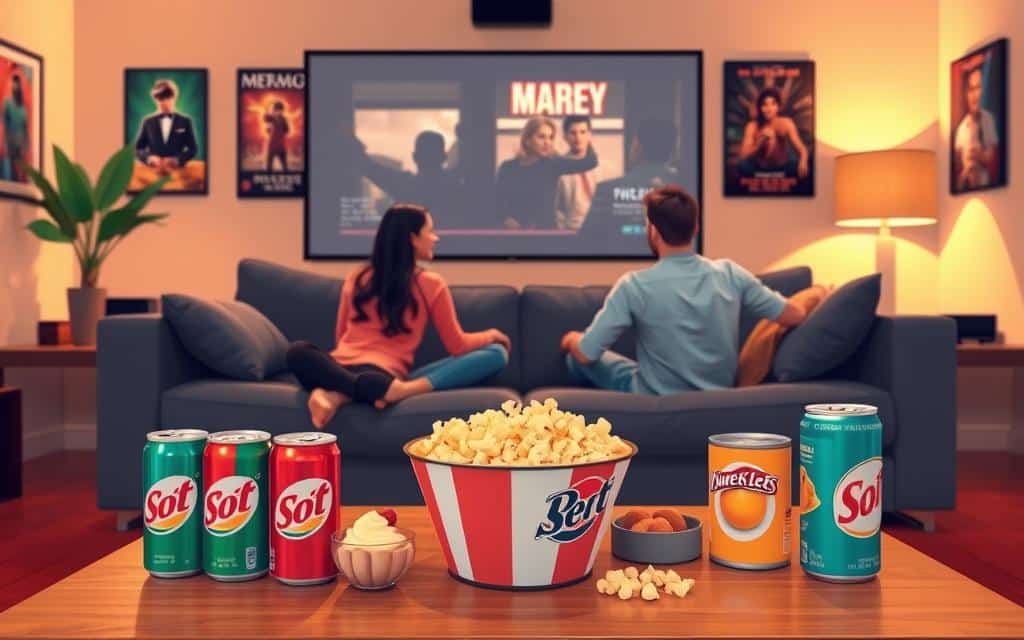
Visual demonstration
Labels, packaging, and props must look lived-in. The camera reads the brand without an odd angle.
- The label sits where it belongs on a table.
- The packaging matches the set style.
- Good examples keep logos subtle, not shouted.
Verbal reference
A line works when the character would actually say it. Keep it short. Make it sound like real talk.
Interaction that matters
The strongest type comes when the item moves the plot. A drink, a device, or a tool can change a scene. That usage makes the brand part of the story.
Rule of thumb: one strong moment beats many weak ones. Every placement must serve the story first to earn trust.
Brief history: from early cinema to streaming-era integrations
On a hot June day in 1896 a Lumière short showed a labeled bar of Sunlight Savon to the camera. That moment stands among the earliest recorded product placement examples on film.
The idea goes farther back in print and stage mentions from the 19th century. As moving pictures gained repeat viewers, brands spotted value.
TV pushed the tactic fast during the 1980s and 1990s. Networks offered households repeated exposure over years. By then, placements became routine in many movies and prime-time slots.
Today the approach spans streaming platforms, music videos, and online clips. Content lives longer now and travels the world quickly.
- The Lumière short in 1896 showed Sunlight Savon on screen.
- 19th‑century media seeded early references.
- TV’s rise in the 1980s–1990s normalized the practice.
- Streaming and music extend reach across devices and time.
Key lesson: early advertising looked obvious. Modern work aims to fit the story so viewers accept the moment rather than tune it out.
| Era | Typical channel | Impact |
|---|---|---|
| Late 1800s | Short films and print | First on-screen brand moments, novelty exposure |
| 1980s–1990s | Broadcast TV | Routine placements, repeat audience reach |
| Present | Streaming & music videos | Global distribution, longer shelf life |
| Across years | Multiple media | Adaptation to viewing habits; context wins over volume |
Standout examples that shaped public attention and sales
A handful of scenes rewrote retail demand for the brands that showed up. Below are tight, real examples that moved buyers and built buzz.
E.T. and Reese’s Pieces
Reese’s Pieces played a small plot role. After the film’s release, sales jumped about 65%. M&M’s passed on the chance. That decision still gets talked about.
Stranger Things and Eggo Waffles
Fans linked Eleven to Eggo. Shelves emptied. The craving felt natural, so demand spiked fast.
Transformers and Chevrolet Camaro
Filmmakers made a Chevrolet Camaro a living role: Bumblebee. The car became a character. That helped dealer interest and brand buzz.
The Devil Wears Prada
Frames filled with Prada, Chanel, Mercedes, Apple gear, and coffee cups. Those cues set status at a glance. The film shaped brand image more than direct sales data, but perception matters.
- Key take: story fit beats sheer airtime.
- One tight tie can lift sales more than many weak shots.
- Good examples product placement live in moments people replay and share.
Benefits and risks brands weigh before a placement
Before you sign a deal, weigh the upside against real risks so this move helps, not hurts, your business.
Upside first: a clear tie can reach big audiences, give lasting recall, and link your name to beloved characters. A single memorable moment can drive search interest and steady sales for months.
Upside: reach, recall, and association
- Wide reach: content travels across platforms and time.
- Subtle promotion: people accept a brand that fits the scene.
- Long lifespan: scenes get replayed, shared, and referenced later.
Downside: cost, reputation, backlash
Costs can climb into the millions for top visibility. Talent trouble or a bad scene can link your name to controversy. That risk hits small brands hardest.
Measurement reality: track real signals
Don’t expect clicks to tell the story. Use sales lift, search spikes, and recall studies to judge impact. Set clear guardrails on usage, scenes, and cuts. One strong fit beats many weak shots.

| Benefit | Typical metric | Practical note |
|---|---|---|
| Reach | Viewership & geographic spread | Plan retail and PR to catch interest fast |
| Recall | Brand lift surveys | Run short studies before and after release |
| Sales | Sales lift & search trends | Attribution often delayed; expect slow gains |
| Risk | Reputational exposure | Contractual guardrails reduce surprises |
Budgets, deals, and how a placement comes together
Money, timing, and fit drive every on-screen deal. I keep it simple when I plan a buy.
What brands pay: why blockbuster visibility costs millions
Top titles can ask seven figures for major screen time. Big reach and a tight release window raise the fee fast.
The fact: more audience means higher price and stricter terms. Studios still put story first. So expect negotiation over screen time, script pages, and who uses the item.
Negotiating usage: script fit, character alignment, and rights clearances
Read the pages that show your item. Ask which character handles it. That part matters more than many shots.
- Lock on-set approval and trailer rights early.
- Include alternates if the cut changes.
- Secure stills, clips, and awards usage in the deal.
- Plan retail and marketing support to turn attention into sales.
- Keep legal tidy: trademarks, music, and clearances can delay delivery.
Tip: Push for simple reporting after release. Even a small spike in searches proves the tie worked.
The future, ethics, and regional twists to watch
Brands now choose between on-set deals and digital add-ons that get dropped into a finished cut. The choice matters for reach and for control.
Regional moves differ. In the U.S. most brands work during filming so directors stage the moment to feel like part story. That helps the camera move stay natural.
Digital insertion and regional practices
Broadcasters can add labels later. Chile has run bold post-production swaps that even parody the idea, like Cerveza Cristal edits. Those digital edits change how a brand appears across markets.
Transparency and disclosure
Be honest. Clear disclosure builds trust. Audiences accept advertising when it’s marked and when the spot serves the scene first.
Best practices
- Serve the scene. Let the story carry the message.
- Avoid awkward frames. Don’t force a close-up.
- Plan retail and social tie-ins so viewers can act quickly.
- Track placements with search and sales trends to learn fast.
- Expect music videos, short clips, and streams to add light touches worldwide.
Bottom line: choose the method that fits creative needs, disclose clearly, and plan real-world follow-up so a screen moment becomes value for your brand.
Conclusion
I keep this simple: focus on fit and the rest follows. A single honest scene will earn more attention and sales than many forced shots.
Remember the big win: Reese’s Pieces rose about 65% after E.T. Forced efforts like Mac and Me drew backlash. Digital swaps such as Cerveza Cristal show regional edits can change outcomes fast. The market was ~ $30B in 2023 and may reach $41B by 2026.
Next steps: align with the story, pick one clear use, lock rights, plan retail for release, and track sales lift, search spikes, and repeat views.
Quick checklist: right fit. clean contract. full clearances. ready retail plan.
