
Did you know that a 2023 industry report found out-of-home advertising creates the highest consumer recall of any media channel? It even beats TV, radio, and online ads. That’s a powerful reason to pay attention.
So, what does this term mean for you? Think about any ad you see when you’re not at home. This includes billboards on your commute or posters at the bus stop. It’s often called outdoor advertising.
This method isn’t new. Showman P.T. Barnum used large posters to promote his circus in the 1830s. The core idea remains the same: reaching people in public spaces.
Today, OOH has evolved. We now have digital screens alongside traditional billboards. This guide will break it all down. I’ll show you how this powerful tool can fit into your marketing strategy and help your business grow.
Key Takeaways
- Out-of-home advertising refers to any visual media placed in public spaces.
- Research shows it achieves the highest levels of consumer recall.
- This format has a long history, dating back to the 1800s.
- Modern OOH includes both traditional static signs and digital displays.
- It offers a tangible way to reach customers in their daily lives.
- This guide will explore various formats and real-world campaign examples.
Overview of Out-of-Home Advertising
When people step outside their front doors, they enter the world of outdoor advertising. This method connects with your audience in their daily environments. It’s about meeting customers where they naturally spend time.
Definition and Key Purposes
Think of this approach as marketing in physical locations. It reaches consumers during their routines. The main goal is building strong brand awareness.
Unlike digital options, people cannot skip these messages. They see your ad during commutes or shopping trips. This creates genuine engagement with potential customers.
Recent research shows impressive results. Nearly 90% of adults notice these ads. About 80% interact with them regularly.
Common Public Settings
You’ll find these campaigns in high-traffic areas. Major highways and city centers are prime locations. Transit hubs like bus stops work well too.
Shopping districts and airports offer captive audiences. Entertainment venues provide additional exposure. Each setting reaches people at different moments.
This strategy creates multiple touchpoints throughout the day. It complements your online efforts perfectly. You reach customers making real-world decisions.
What is Out-of-Home (OOH) Advertising and Its Examples
Today’s public space marketing splits into static and dynamic display options. Each format serves different business objectives. Understanding their strengths helps you make smart choices.
Static Formats versus Digital Displays
Traditional printed billboards offer constant visibility. Your message stays up 24/7 with no competing ads. They work well for long-term brand building.
Digital screens bring motion and flexibility. You can update content quickly or run video ads. They respond to real-time conditions like weather changes.
| Feature | Static Billboards | Digital Screens |
|---|---|---|
| Cost per thousand views | $2-9 (lower cost) | Higher investment |
| Content updates | Slow and costly | Instant changes |
| Message duration | Months of exposure | 8-10 second rotations |
| Best for | Brand awareness | Timely promotions |
Real-Life Advertising Examples
Sea-Doo used digital billboards in Florida. Their campaign achieved a 144% increase in purchase consideration. Brand perception improved by 130%.
H&M placed digital screens in Portuguese malls and transit stations. They boosted positive brand image by 81% during a seasonal push. These results show the power of strategic placement.
Choose static formats for lasting presence. Opt for digital when you need flexibility. Both options deliver measurable impact for your business.
Types and Formats of Outdoor Advertising
Professional marketers group these media formats into four strategic categories. Each type serves different business goals and reaches unique audiences. Understanding your options helps you make smart placement decisions.
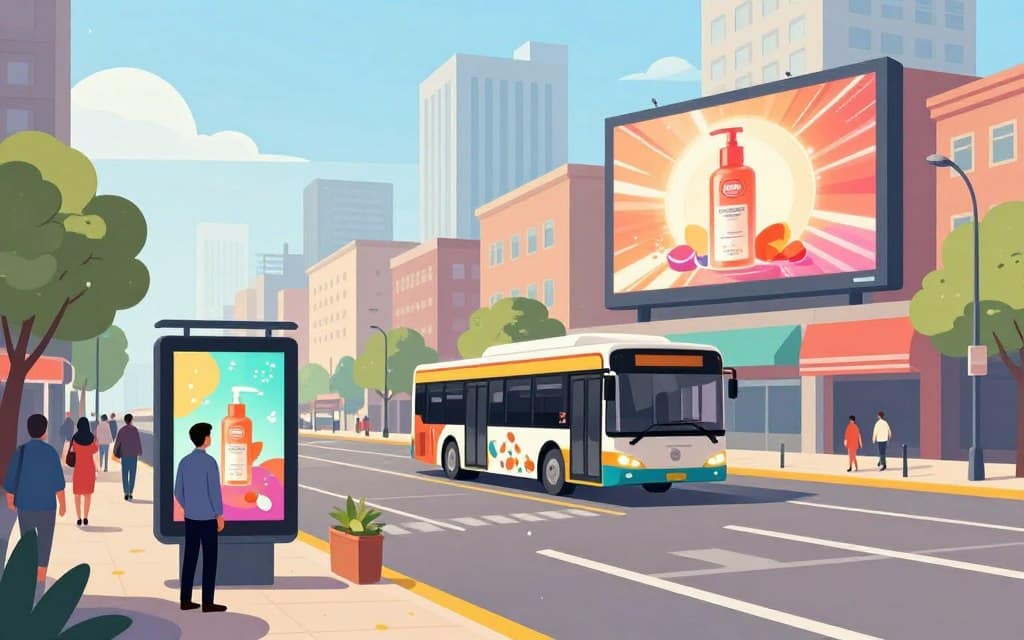
Billboards and Digital Screens
Billboards deliver massive visibility along highways and major roads. They work perfectly for brand awareness campaigns. Static versions offer constant exposure for months.
Digital screens bring motion and flexibility to your message. You can update content quickly or show video ads. These displays capture attention with bright, changing visuals.
Street Furniture and Transit Ads
Street furniture includes bus shelters, benches, and kiosks. These placements reach people at eye level in high-traffic areas. They’re ideal for local businesses targeting neighborhood customers.
Transit advertising connects with commuters during daily travel. Options include bus wraps, subway posters, and airport displays. This format moves your message through target neighborhoods.
| Format Type | Best Locations | Ideal Use Cases |
|---|---|---|
| Billboards | Highways, city centers | Brand awareness, product launches |
| Digital Screens | Shopping districts, transit hubs | Timely promotions, video content |
| Street Furniture | Downtown cores, pedestrian zones | Local targeting, foot traffic |
| Transit Ads | Bus routes, airports, subways | Commuter reach, mobile messaging |
Choosing the right format depends on your campaign goals. A local restaurant might use bus shelter ads nearby. A national brand could benefit from highway billboards. Learn more about matching formats to your business in our complete OOH advertising guide.
Benefits of OOH Advertising for Brands
Your advertising budget needs to work hard, and public space marketing delivers exceptional value. This approach gives your brand constant visibility that digital channels can’t match.
People see your message during their daily routines without skipping or blocking it. This creates genuine engagement that builds trust over time.
Visibility and Long-Term Presence
Research shows 88% of U.S. adults notice these ads in their environment. Even more impressive, 73% view them favorably according to Harris Poll data.
This favorability beats television, social media, and online display options. Your message gains credibility simply by appearing in public spaces.
Long-term presence matters for building familiarity. Seeing the same billboard during daily commutes creates lasting brand recognition. This reinforcement makes your other marketing efforts more effective.
Cost-Effective Exposure
The average cost per thousand impressions ranges from $2 to $9. This represents significant savings compared to television ($16-45) or digital video campaigns.
You also avoid brand safety concerns common with online media. Your ads won’t appear beside inappropriate content or suffer from fraud issues.
- Drives real purchasing behavior – 51% of people visiting businesses after seeing directional ads
- 93% of those visitors make actual purchases
- Most effective offline medium for driving online searches and website visits
This format delivers measurable results while protecting your brand’s reputation. It’s a smart choice for businesses wanting maximum impact.
Exploring Digital Out-of-Home (DOOH) Opportunities
Digital screens are getting smarter, opening new doors for your campaigns. This evolution moves beyond simple display into responsive, data-driven media.
I’ll show you how this technology makes your public space marketing more effective and efficient than ever before.
Programmatic Buying and Real-Time Updates
Think of programmatic buying like an automated stock market for ad space. You set your budget and target audience. The system then purchases slots on digital screens that match your criteria.
This approach offers incredible flexibility. You can buy space without long-term contracts. Your campaign can adjust mid-flight based on performance data.
Programmatic DOOH now makes up 30% of digital OOH spending. Experts predict it will reach 65% by 2029.
Real-time updates take this further. Your message can change based on immediate conditions.
- Show breakfast specials on screens near offices during the morning commute.
- Promote umbrellas or raincoats when the weather forecast turns stormy.
- Celebrate a local sports team’s victory minutes after the game ends.
This responsiveness ensures your ads stay relevant and engaging.
Dynamic Interactive Content
Dynamic content takes personalization to the next level. Your ads automatically adapt based on who’s nearby or current events.
This contextually relevant approach delivers a significant performance boost. Brands using dynamic DOOH content see an 18% increase in advertising awareness compared to static messages.
Marketers now optimize these campaigns in real-time, just like with online ads. This makes outdoor advertising a truly responsive part of your media mix.
How to Choose the Right OOH Advertising Location
Smart location selection makes your outdoor media budget work much harder. I’ll show you how to match your message with the perfect physical spaces.
Identifying High-Traffic Areas
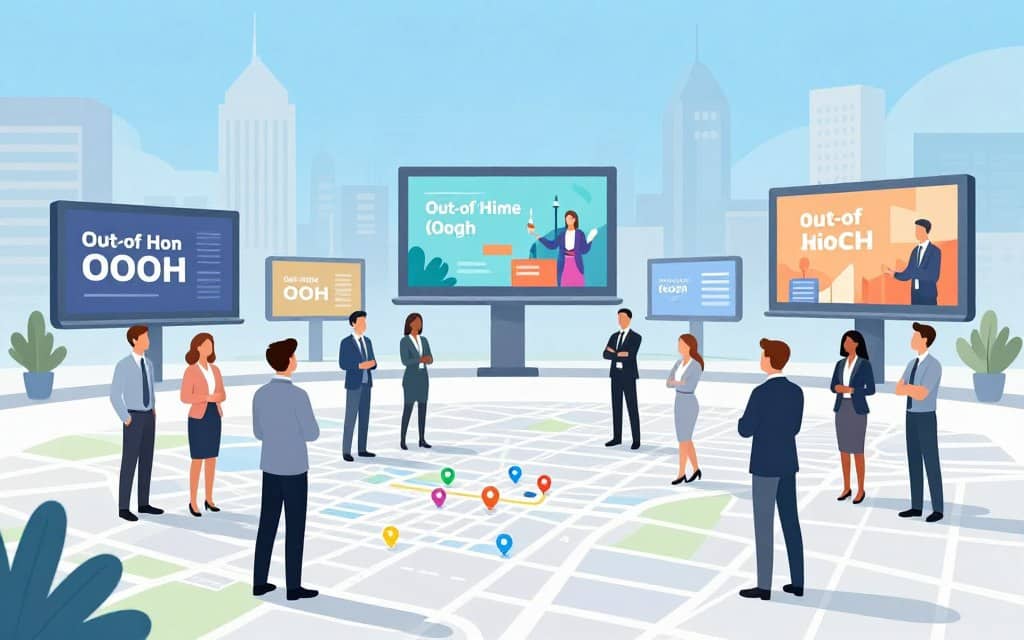
Start by mapping where your ideal customers naturally gather. Look for commuter routes, shopping districts, and entertainment zones.
Consider both foot traffic and vehicle traffic. A bus shelter reaches pedestrians while a highway billboard targets drivers. Each serves different purposes.
Dwell time matters too. People waiting at transit stops see your ad longer than drivers passing quickly. Choose locations based on viewing time.
Targeting Specific Demographics
Modern networks use mobile data to reveal who passes each display. You get historical demographics and behavior patterns.
Match your business to relevant contexts. A lunch restaurant belongs near office buildings. A sports bar fits better near stadiums.
Contextual placement boosts relevance. A gym ad near offices targets desk workers. Headphone brands succeed near universities and libraries.
Balance reach against precision. Highway placements deliver more impressions. Targeted spots near your store often convert better.
Practical Tips to Boost Your Campaign Impact
The most successful campaigns I’ve seen follow a simple formula for creative impact. They combine smart messaging with strategic data use. This approach transforms good efforts into great performers.
Effective Creative Messaging
Keep your message to seven words or less. People only have seconds to read while moving past your display. Bold visuals and high-contrast colors grab attention from a distance.
Your creative competes with everything in the environment. Make it impossible to ignore. Include clear calls-to-action like “Search Our Brand” or a simple web address.
Leveraging Mobile and First-Party Data
Use mobile location data to understand who’s near your billboards. Tailor messages to match their interests and behaviors. This creates more relevant engagement.
Combine your customer data with strategic placement. If your customers shop at certain stores, place your ads nearby. Retail media networks now use purchase data to power digital displays.
74% of mobile users take action after seeing digital public ads. Test different messages across locations using programmatic options. Create urgency with time-sensitive offers that change throughout the day.
Integrating OOH with Digital Marketing Channels
Modern technology now lets your outdoor media talk directly to your digital marketing. This connection creates powerful campaigns that follow customers from the street to their screens.
Cross-Channel Strategies
Start by retargeting people who saw your billboards with online ads. Octopus Energy used this approach effectively.
They showed digital screen ads first, then followed up with display ads to the same audience. This strategy achieved a 1.34% click-through rate across 3 million impressions.
Create sequential messaging across channels. Show a teaser on a billboard, then reveal details in social media ads to people near that location.
Enhancing Online Engagement and Measurement
Track the complete customer journey from billboard exposure to website visits. Chicago Fire FC combined digital screens with CTV and display advertising.
Their campaign drove 16,000+ clicks and delivered 122% return on ad spend. Modern analytics tools prove the value of your outdoor investment.
Mirror your social content on digital screens in real-world locations. This creates consistency between online and offline experiences for your audience.
Emerging Trends in Outdoor Advertising
Artificial intelligence is revolutionizing the way marketers approach public space campaigns. The technology creates smarter, more responsive messaging that adapts to real-world conditions.
Retail media represents one of the fastest-growing channels. In-store advertising will make up nearly 20% of total spending by 2027. Most growth happens through digital screens inside stores.
Advancements in Technology and Data Integration
AI processes massive datasets to adjust your content automatically. It responds to weather, traffic patterns, and audience behavior. This approach remains privacy-friendly while boosting performance.
New environments are opening up for brands. Gyms, healthcare offices, and electric vehicle charging stations offer fresh opportunities. EV stations are particularly valuable—people spend 20-30 minutes waiting with little to do.
| Feature | Traditional Approach | AI-Enhanced Approach |
|---|---|---|
| Content Adaptation | Static messages for months | Real-time updates based on context |
| Audience Targeting | General demographic data | Behavioral patterns and real-time analytics |
| Measurement | Estimated impressions | Direct correlation to foot traffic and conversions |
| Campaign Optimization | Manual adjustments | Automated performance improvements |
The Future of Programmatic DOOH
Programmatic buying now represents 30% of digital spending. This will jump to 65% by 2029 as advertisers seek flexibility. Automated systems purchase space matching your criteria without long contracts.
Measurement capabilities are finally matching digital channels. AI-powered tools connect your billboard exposure directly to store visits. This proves the real business impact of your investment.
Despite only 10% of marketers citing this media as a top priority, 40% expect spending increases. The results speak for themselves. Learn more strategic approaches in our complete OOH advertising guide.
Conclusion
Recent industry data confirms that reaching customers in their daily environments delivers real results. US revenues hit $2.86 billion in Q2 2025, marking 17 straight quarters of growth.
I’ve shown you the main formats available for your business. You can choose billboards for broad reach or street furniture for local targeting. Transit ads connect with commuters while place-based displays work in stores.
The benefits are clear. This approach costs less per impression than TV or digital video. People cannot skip these messages, and they drive real foot traffic to physical locations.
Modern measurement tools now track performance from exposure to store visits. You can combine physical placements with digital retargeting for complete campaign coverage.
Future trends point toward AI optimization and programmatic buying. New locations like EV charging stations offer fresh opportunities.
This channel now outperforms traditional TV for building brand awareness. It gives you the flexibility and tracking you expect from modern marketing.
