
I spent months burning through my hard-earned budget on best social media ad formats that looked great but never converted. It felt like I was shouting into a void while my competitors raked in profits every single day. I soon realized the problem wasn’t my product or my targeting; it was the way I presented my offer to the world.
Research shows that 63% of users think most online campaigns do not look professional. This usually happens because the messaging doesn’t match the visual style of the post. I learned the hard way that picking the wrong layout is like trying to sell a house through a text message—people simply scroll past when the medium feels off.
With mobile spend hitting $88.1 billion soon, mastering your ads is vital for generating sales. Since 75% of Gen Z shoppers follow these ads, I focus on styles that drive real revenue. I am sharing my proven strategies to turn viewers into customers without wasting your money on marketing fluff.
Key Takeaways
- Aligning your message with the right layout prevents user scrolling fatigue.
- Mobile marketing spending is projected to reach $88.1 billion by 2028.
- Nearly 75% of Gen Z and many millennials are influenced by online ads.
- Unprofessional appearances often stem from poor message-to-style alignment.
- Strategic selection of campaign styles is more effective than chasing fleeting trends.
- Proven layouts help budget-conscious owners turn viewers into paying customers.
Why I Stopped Wasting Money on the Wrong Ad Formats
For a long time, I watched my ad spend vanish into thin air because I was choosing formats based on what looked good rather than what worked. I spent too much time thinking that more money meant better results. The truth is that I was picking visuals that didn’t match what I was trying to accomplish.
Competition in the paid social media market is getting tougher every day. Users are becoming desensitized to repetitive content. They scroll past ads that do not immediately grab their attention or offer value.
I realized I needed to stop copying every other brand and get strategic. I used to run simple image posts when I needed to explain a complex product. This was a major mistake for my digital marketing efforts, and my conversion rates suffered.
I should have used video to show real value to my customers instead of a static picture. The breakthrough happened when I started matching my ad format to my specific objective. I now choose my delivery method based on whether I want awareness, consideration, or direct sales.
I no longer focus on vanity likes or empty impressions in my advertising reports. I track which ads actually move the needle on revenue for my business. Wasting money on the wrong ads means missing out on users who are ready to buy.
I learned to start a-b testing ad creatives for each campaign to see what fits best. Now, I choose the format first based on my goal rather than what is easiest to create. This shift alone saved me thousands of dollars in my latest campaign.
Successful ads are about strategy, not just pretty pictures. I have cut the options that look good but do not drive growth. My advertising now focuses on presenting the right offer to the right people at the right moment.
| Strategy Pillar | Old Approach (Wasteful) | New Approach (Effective) | Business Impact |
|---|---|---|---|
| Format Choice | Based on aesthetics | Based on campaign goals | Higher conversion rates |
| Primary Metrics | Likes and impressions | Revenue and sales | Better ROI on spend |
| Creative Style | Generic static posts | Goal-specific media | Stopped audience blindness |
| Budget Focus | Spend more to win | Spend smarter to win | Saved thousands of dollars |
How I Choose the Best Social Media Ad Formats Based on My Goals
I used to pick my ad visuals based on my personal preference, but I realized that my revenue only grew when I matched my choice to my marketing target. Choosing the best social media ad formats is a strategic step that requires focus. I always start by defining one specific goal for my social media advertising to avoid confusion. Using the wrong ads for the wrong purpose is a fast way to drain your budget.
My Process for Matching Format to Campaign Objective
My process for every new campaign is simple and direct. I write down the single most important result I want to see before I ever open the ad manager. I have learned that trying to chase several results at once usually leads to failure and wasted money.
I force myself to pick just one priority, such as website visits or direct sales. This clarity allows me to select the best social media ad formats that are built for that specific outcome. When you align your creative choice with your goal, the platform’s algorithm works much harder for you.
Questions I Ask Before Selecting Any Ad Format
Before I commit to a specific format, I run through a mental checklist to ensure I am on the right track. I ask myself who my target audience is and which platform they actually use during their downtime. This helps me avoid placing ads where they will be ignored by the people I want to reach.
I also take a hard look at the content I have available right now. Strong, high-quality images might lead me toward one format, while raw video clips might point me toward another. I also consider the following constraints during my selection campaign:
- What is my total budget for this specific test?
- Does this format highlight the unique features of my product?
- What specific action do I want the user to take immediately?
How I Decide Between Awareness, Consideration, and Conversion Formats
I split my social media advertising into three stages based on the customer journey. For brand awareness, I need to reach a cold audience that has never heard of me. At this stage, I focus on ads that are easy to consume, like short videos or simple stories.
When I move to consideration or conversion, the formats change to provide more detail or a faster checkout. I match the ads to where the person is in their buying journey, not where I wish they were. This table shows how I typically pair my objectives with specific formats:
| Funnel Stage | Recommended Format | Primary Goal |
|---|---|---|
| Awareness | Video Ads | Reach and Recognition |
| Consideration | Carousel Ads | Education and Clicks |
| Conversion | Collection Ads | Immediate Purchases |
Product-Focused Ad Formats That Drive My E-Commerce Sales
When my goal is moving inventory, I turn to specific ad formats designed to make products the star of the show. I have found that general advertising often costs too much for a small return. By focusing on sales through direct product showcases, I can connect with shoppers who are ready to buy.
I stopped guessing what my audience wanted and started using data-driven layouts. These formats simplify the customer journey from a simple click to a completed checkout. Below is a quick comparison of the formats I rely on most for my store.
| Format Type | Best Feature | Platform Goal |
|---|---|---|
| Carousel | Multi-link sliding cards | Showcase variety |
| Collection | Full-screen experience | Mobile shopping |
| Dynamic | Automatic retargeting | Recover lost carts |
“The most effective ads had less than 20 words in the ad copy and 4-5 words in the link headline.”
Carousel Ads: How I Showcase Multiple Products in One Ad
I use carousel ads when I need to showcase multiple products in one go. This format allows me to feature up to 10 images videos within a single unit. Each card has its own unique link and call-to-action button to guide customers.
I love using these to tell a sequential story or show off a wide range of colors for one image. This interactive content encourages people to swipe through and find exactly what they need. It is a great way to use one advertising budget to highlight an entire collection.
Collection Ads: My Mobile Storefront That Converts Browsers
I treat collection ads like a mini mobile storefront for my brand on every social platform. They feature one large video banner with a row of four items displayed underneath. When users tap the ad, they see a fast-loading visual experience that feels like a real shop.
This format keeps users engaged without forcing them to wait for a slow website to load. I use this when I want to tell a visual story and provide an immersive way to browse. It works perfectly for turning casual scrollers into serious customers.
Dynamic Product Ads: How I Retarget Cart Abandoners
I rely on dynamic product ads to do the heavy lifting of retargeting for me. By using a pixel on my website, I can show people the exact items they left behind. These ads automatically pull current prices and details from my catalog to stay accurate.
It is the most efficient way to run ads because the system chooses what to show. I don’t have to create a new product layout for every single shopper. This automation saves me hours and brings back people who were already interested in my brand.
Shopping Ads: Why I Use These for Instant Purchases
I use shopping ads for instant purchases because they make buying incredibly simple for everyone. These feature tags that let people see a price and a product description with one tap. I’ve found these ads work best when I use high-quality images and very little text.
People make quick decisions while scrolling through a feed, so I keep my message clear. This format is designed for speed and convenience on any mobile platform. It turns a moment of interest into a variety of products sold in just a few clicks.
Video Ad Formats I Use to Capture Attention and Close Sales
Since Facebook users watch nearly 3 billion hours of video daily, I make sure my brand shows up where they are looking. I’ve found that video ads are the most visually captivating way to grab and hold attention. They allow me to tell a story that static images simply cannot match.
It is helpful to understand what type of advertising a promotional video before you start filming. I focus on creating content that feels real rather than overproduced. This helps me build trust with my audience without needing a massive production budget.
Short-Form Video Ads on Reels and TikTok
I love using Reels and TikTok because these ads blend seamlessly with organic content. This means people often don’t realize they are watching an ad right away. I keep my short-form video under 15 seconds with one powerful message.
Attention spans are very short today, so I hook my viewers in the first two seconds. Authentic, unpolished ads usually get more engagement than fancy commercials. I want my posts to look like something a friend would share on the platform.
In-Stream Video Ads on YouTube and Facebook
I use in-stream ads video placements to reach an audience that is already watching video. These appear before or during a clip the user has chosen. This ensures they are already in “watching mode” when my brand appears.
I always include captions in these video ads because 85% of Facebook viewers watch without sound. I also use 6-second bumper ads at the end of videos for a final punchy message. These are non-skippable, so I keep the information very direct.
| Video Format | Ideal Length | Key Benefit |
|---|---|---|
| Short-Form | Under 15s | High viral potential |
| In-Stream | 15s – 30s | Engaged viewers |
| Bumper | 6s | Quick video ads recall |
Story Video Ads That Feel Like Organic Content
I use stories on Instagram and Facebook because they take up the entire screen. These video clips feel like a personal update from a friend. Since stories disappear after 24 hours, they create a natural sense of urgency for users.
I design my ads to be vertical and fast-paced to match the platform style. I often add interactive elements like polls or swipe-up links. Urgency and interaction are the two things that drive my sales higher in this format.
Lead Generation Formats That Build My Customer Database
Building a list of future buyers is the best way I know to ensure long-term business growth without overspending. I use these specialized ads to gather contact info for newsletter subscribers or follow-up services.
I have found that lead ads work best when I offer something valuable. If I give away a free guide, people are much more likely to share their details. This strategy turns casual browsers into potential customers who want to hear from me.
Lead Form Ads With Pre-Filled Contact Information
A high-quality 3D isometric illustration of a smartphone displaying a sleek contact form where fields like name and email are already filled in, surrounded by the logos of Facebook, Instagram, and LinkedIn, soft professional lighting, vibrant corporate colors.
I love this format because it removes friction for my audience. When I run a campaign on a media platform like LinkedIn, the form pre-fills with the user’s details automatically.
People can join my list with just two taps. This simple process really helps my advertising results stay high by increasing conversion rates. I always make sure my lead ads show exactly what the user is getting, like an e-book cover.
I also integrate these forms with my CRM system. This allows new contacts to flow into my database instantly. I can then follow up while their interest is still fresh and high.
Messenger and Conversation Ads That Start Dialogues
A realistic photo of a person’s hand holding a smartphone showing a friendly chat interface with automated helpful responses, a “personal shopper” vibe, warm and inviting office background with soft bokeh.
Sometimes a simple message works better than a long landing page. I set up social media ads to act like a personal shopping assistant.
I use automated responses to guide people toward the right products or answers. This one-on-one approach helps me answer questions for customers in real-time. It builds a level of trust that static images just can’t match.
These conversation ads feel more like a chat with a friend. I’ve learned they work incredibly well for complex social media offers where people need more info. It addresses objections immediately and keeps the sale moving forward.
Interactive Ad Formats I Use for Higher Engagement
Interactive ads are my secret weapon for turning passive viewers into active participants who actually remember my brand. I use digital technology to encourage people to stay on my ads longer and interact with my content. This approach builds a real connection between the business and the audience.
The longer people stay, the better they remember who I am. I have found that high interaction often leads to better feelings toward my products. It makes the viewer feel like they are part of the story.
Instant Experience Ads That Keep Users on Platform
I use instant experience ads when I want to create an immersive, full-screen mobile experience. These ads keep users engaged without sending them to an external website where they might bounce. I’ve found that they work beautifully for showcasing product catalogs.
I love using these to tell brand stories or create “choose your own adventure” paths. This makes customers active participants instead of just viewers. It turns a simple browse into an exploration.
“The best marketing doesn’t feel like marketing; it feels like a conversation between friends.”
The best part is that media platforms reward me for keeping people on their app. The more time people spend interacting, the lower my advertising costs usually become. This makes it a great choice for my budget.
Polling and Quiz Ads for Audience Interaction
I use polling and quiz ads on Instagram Stories to drive engagement and learn about my audience. These tools turn my ads into two-way conversations instead of one-way broadcasts. I often ask customers which color they prefer or what features matter most to them.
| Ad Format | Main Benefit | Best Interaction |
|---|---|---|
| Instant Experience | Zero Loading Speed | Swiping Catalogs |
| Polling Ads | Market Research | Voting on Options |
| Quiz Ads | Customer Education | Testing Knowledge |
Quizzes are also great for education. I create interactive experiences that feel like games to teach people about my products. This strategy increases engagement and makes the experience more memorable for everyone involved.
AR Lenses and Filters on Snapchat
I experiment with AR lenses and filters because they let customers virtually try on products. This interactive experience allows users to see how items look in their own space. It creates a fun moment that they often share with their friends.
I use these branded effects to make my ads feel more like a tool than a sales pitch. People enjoy playing with the filters, which builds a strong bond. It is a very effective way to stand out in a crowded feed.
AR creates memorable moments that stay with customers long after they close the app. This builds awareness and positive sentiment for the brand. Over time, these fun interactions translate into real sales for my business.
Platform-Specific Formats That Deliver Results for My Brand
I have learned that matching my message to the specific social media platforms makes a massive difference in my ROI. I don’t just throw money at every channel and hope for the best. Instead, I focus my media advertising where I know my customers spend their time.
Facebook and Instagram: My Go-To Formats
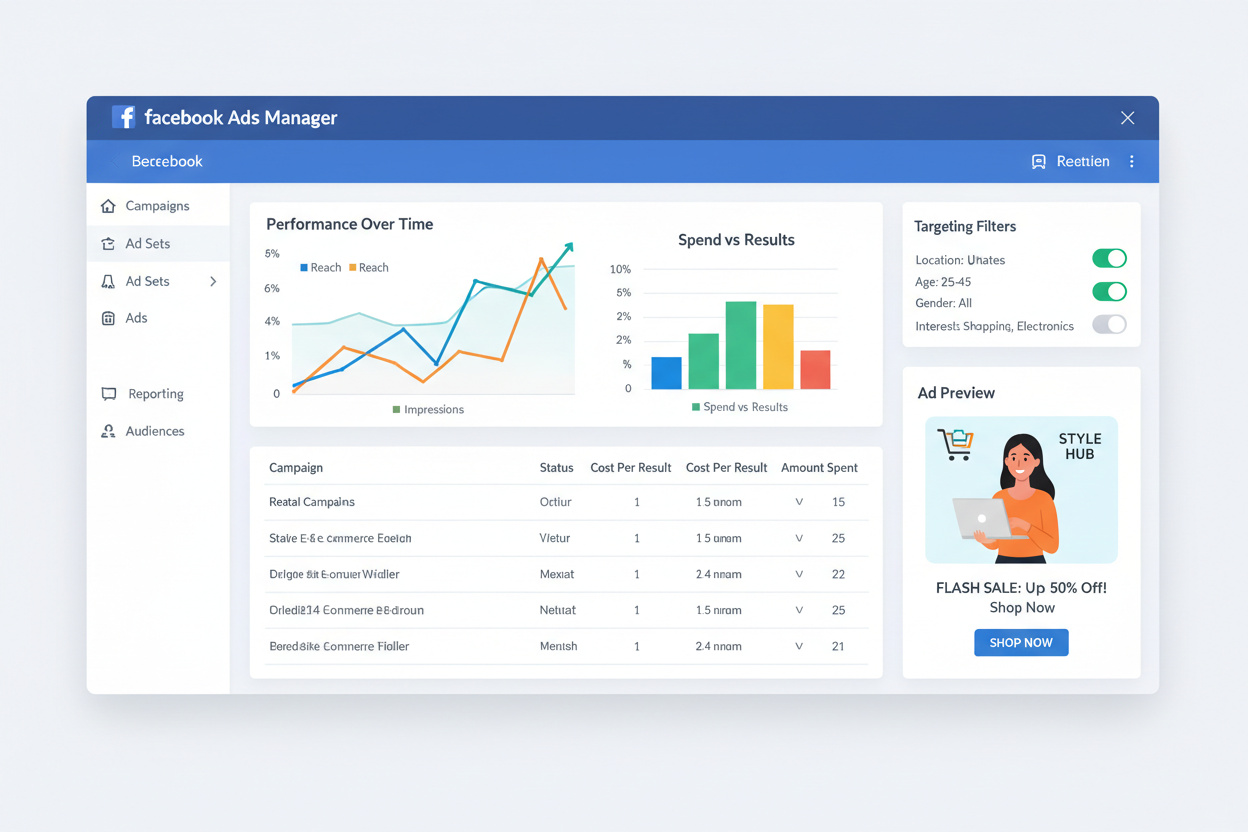
I use Facebook Ads Manager to reach a huge variety of people across every demographic. These social media platforms offer the most sophisticated targeting tools I have ever used for my brand. I run an image video combination in the main feed to see what attracts the most clicks.
Instagram works incredibly well for products that look great because it has the second-highest engagement rate. I often use stories to show behind-the-scenes content that feels more personal to my followers. This mix of ads helps me stay top-of-mind without being too pushy.
TikTok Shop Ads for Impulse Buying
I use TikTok when I want to reach younger audiences who love fast-paced content. The platform grew from 35.7 million US users in 2019 to over 94 million in 2022. It is a powerful video space where I can drive sales through immediate impulse buying.
TikTok Shop ads allow customers to buy products without ever leaving the app. This creates a seamless experience that turns a quick view into an instant sale. I find it works best for items that solve a problem in a visually exciting way.
LinkedIn Sponsored Content for B2B Sales
LinkedIn is where I go for professional B2B connections since it has over a billion members. I can target specific decision-makers by their job title or company size on this platform. This specific channel works best for my higher-priced services that require deep trust.
I usually post a high-quality image or a white paper to show my expertise to other professionals. It feels different than scrolling a social feed at night because people are in a work mindset. This professional media advertising builds my authority and generates high-quality leads.
Pinterest Shopping Ads for Visual Discovery
Pinterest is a unique social media platform because people use it specifically to plan and shop. My brand sees a very long shelf life here because pins don’t disappear after a single day. I use a smart image video strategy to help users find exactly what they need.
These ads act as a digital catalog that lives on for months. Users are much more receptive to seeing an image of a product here because they are looking for inspiration. It is my favorite video and static tool for driving consistent traffic to my shop.
How I Optimize Ad Formats for Maximum ROI
I don’t just set my advertising and forget it; I use a specific system to ensure every dollar works harder. To get the best performance, I use the AIDA framework to evaluate how customers see my content. This structure guides the user experience from the first glance to the final click.
My goal is to guide a lead through four stages: Attention, Interest, Desire, and Action. If a campaign fails to grab someone in the first second, it won’t deliver the sales I need. I focus on these practical steps to refine my strategy.
I Always Design for Mobile First
I design every one of my ads for mobile first. Most users access social platforms on their phones, so a desktop-only view is a waste of money. I make sure my social media advertising includes legible branding and clear text that is easy to read on a small screen.
Mobile users scroll fast, so I use eye-catching graphics to stop the thumb. If the formats I choose don’t look perfect on a smartphone, I change them immediately. High-quality visuals are the key to keeping people from scrolling past my brand.
My A/B Testing Strategy for Different Formats
I run A/B tests on different ads by changing just one variable at a time. For example, I might test image ads against a short video to see which format drives more traffic. This helps me find the best formats for my specific products.
I let my tests run for at least 3 to 7 days before making any big changes. This gives the campaign enough data to show real results. Making decisions too early based on a few clicks often leads to poor choices and lost revenue.
Metrics I Track Beyond Vanity Numbers
I track metrics that actually matter for my bottom line, not just vanity numbers like likes or shares. I focus on return on ad spend (ROAS) and cost per purchase to judge my performance. These results tell me if I am making money or just gaining popularity.
I also monitor my quality score closely. A higher score means my ads rank better and cost less per engagement. This saves me money while helping my campaign reach a wider audience for a lower price.
| Metric | Why It Matters | Target Goal |
|---|---|---|
| ROAS | Measures profit vs spend | 3.0 or higher |
| Quality Score | Lowers your cost per click | 8/10 or better |
| Action Rate | Shows if users took a step | Consistent growth |
How I Repurpose Organic Content as Paid Ads
I repurpose my best-performing organic content as paid advertising because I already know it works. I look for posts that got a lot of engagement from my audience naturally. Boosting these formats is much smarter than creating a new ad from scratch.
Success in marketing comes from a smart strategy, not just a big budget.
I identify posts with high comment counts and turn them into social media advertising with a clear call-to-action. This method delivers results because the creative is already proven to resonate with real people. It saves me creative performance time and maximizes my budget.
Conclusion
I have learned that the key to winning at digital marketing is matching your chosen media to your specific business needs. Selecting the right format can transform your campaign from one that blends in to one that captures attention. This choice is often the difference between a wasted budget and a strategy that effectively boosts sales.
I do not chase every new trend on social media. Instead, I focus on the formats that consistently deliver results for my business. Whether I use product-focused ads or lead forms, I always prioritize the journey of my target customers.
I encourage you to start with one or two formats that align with your immediate goal. Test them thoroughly and expand as you learn what your audiences prefer. For instance, you can advertise on LinkedIn for B2B success by using professional ads to reach decision-makers.
Effective formats are not magic bullets, but they work when you use them strategically. I stopped wasting money on powerful ads that did not fit my unique brand identity.
Stay informed and refine your social media advertising approach on social media. Successful advertising comes from testing ads and tracking real performance data to ensure long-term growth. Use the table below as a quick guide for your next steps.
| Action Step | Expected Benefit |
|---|---|
| Match Format to Goal | Higher ROI and lower wasted spend |
| Design for Mobile First | Better engagement from scroll-heavy users |
| A/B Test Creative | Data-driven insights for scaling |
