
Did you know 38% of the American workforce are now independent professionals? That’s over 76 million people.
The industry is worth billions and keeps growing fast. Companies plan to hire more of this talent next year.
I get it. Standing out feels tough with so much competition. You need clients, but your budget is tight.
I’ve been there. I’ve tested countless sites for self-promotion. Some delivered great opportunities. Others just wasted my time.
This isn’t about posting your profile everywhere. It’s about smart, strategic placement.
Different sites attract different types of clients. Their budgets and expectations vary wildly.
My goal is simple. I’ll show you the specific places that work. You’ll learn which spots favor beginners versus experts.
You’ll discover how to maximize your visibility without spending a fortune. The moment to get positioned right is now.
Key Takeaways
- The market for independent talent is large and growing rapidly.
- Effective self-promotion requires strategy, not just posting everywhere.
- Different online sites cater to different client types and budgets.
- Some platforms have hidden fees, while others offer real value.
- Maximizing your visibility is key to attracting the right clients.
- Personal testing reveals which options deliver opportunities versus wasted effort.
- Positioning yourself correctly now takes advantage of current business demand.
Freelance Advertising in Today’s Market
Forget the old side-gig stereotype. Freelancing is now a dominant force in the U.S. labor market. It’s the primary income for millions.
This shift changes how you find work and how businesses find talent. The landscape is bigger and more competitive than ever.
Current Trends and Statistics
The numbers are staggering. Right now, 76.4 million freelancers are working in America.
That number is set to explode. Look at the projected growth:
| Year | Projected Freelancers (Millions) | % of U.S. Workforce |
|---|---|---|
| 2024 (Current) | 76.4 | ~38% |
| 2027 | 86.5 | 50.9% |
| 2028 | 90.1 | Majority |
These figures are more than data. They signal a permanent change in how work gets done.
My key insights? Companies aren’t just testing the waters. 99% plan to hire freelancers in 2025. 69% already did after recent layoffs.
The Rise in Freelancing Opportunities
Why this explosion? Businesses have figured it out. Hiring talent this way saves them money and time.
It’s not just about one-off jobs. Companies now rely on freelance pros for ongoing, strategic projects.
This creates huge opportunity. More jobs are available across every industry.
The other side? Fierce competition. You must stand out among millions of other skilled freelancers.
These insights help you position yourself where companies are actively looking. That’s the new normal.
Practical Tips for Budget-Conscious Freelancers
The secret isn’t having a huge ad fund. It’s knowing exactly where to put what you have.
I started with very little. That forced me to be strategic. You don’t need a massive budget to get noticed. You need to be smart with your time and money.
Look at the average rate. It’s $47.71 per hour. That number mixes beginners and experts. For quality marketing specialists, clients budget $60 to $100. Price yourself within that range based on your skills.
Your success depends on choosing the right options. Not all platforms are equal for your business.
- Test before you invest. Use free basic listings first. See what actually brings clients.
- Understand the fee structure. Does the platform take a cut or charge a monthly fee? Weigh these options against your profits.
- Match the tool to your needs. Prioritize flexibility. Some setups work better for long-term projects than one-off tasks.
- Avoid premium features you don’t need. Many freelancers waste money here. Free alternatives often work just fine.
Budget-conscious doesn’t mean cheap. It means every dollar has a job. Your goal is maximum return, not just minimum cost.
Platforms: Where to Advertise Freelance Services
Navigating the sea of online marketplaces requires a clear map of costs and benefits. I learned this the hard way. Your choice directly impacts your income and client quality.
Not all platforms are created equal. Some take a hefty slice of your earnings. Others charge upfront just to apply.
Evaluating Platform Fees and Features
Understanding the fee structure is your first defense. It prevents nasty surprises when you get paid.
Look at this comparison of major platforms:
| Platform | Seller Fee | Key Features |
|---|---|---|
| Upwork | 5% – 20% (sliding scale) | Payment protection, long-term client rewards |
| Fiverr | 20% flat commission | Fixed-price packages, built-in dispute resolution |
| Other Marketplaces | 0% – 20% variable | Varies widely; check for time tracking and vetting |
The features each platform offers add real value. Payment protection and dispute resolution save huge headaches.
Finding Quality Talent Without Overspending
For clients, smart pricing is key. You want top talent without breaking the bank.
Reputable platforms invest in vetting. This means fewer scams for everyone. It creates a better pool of talent.
Pricing transparency helps you position your services correctly. See what others charge. Match your rates to your skill level and the platform’s expectations.
Your goal is simple. Find the space where your specific features shine. Connect with clients who value your quality work. Good vetting processes on both sides make this possible.
Utilizing Upwork for Diverse Opportunities
With over 18 million registered professionals, Upwork is a universe of its own for finding talent. This scale means you’ll find projects for every marketing skill, from SEO to social media. The price range is vast, from $15/hour tasks to $150+ strategic work.
Reviewing Proposals Effectively
The hiring process here is competitive. Clients often see 20-50 proposals per job. You can’t just spam applications. Upwork uses “connects,” an internal currency, to apply.
I’ve learned success demands customizing every proposal. Show you read the job post. Your profile must convince skeptical clients. Showcase specific samples and client reviews.
The platform offers safety tools like escrow and time tracking. This protects everyone. Your goal is to stand out in a pool of mixed talent, from beginners to seasoned professionals.
Respond quickly and ask smart questions. This shows you’re ready. A strong profile turns the process from a numbers game into a showcase for your skills.
Discovering Affordable Solutions with Fiverr
The $5 gig is mostly history, but the platform built on that idea still delivers value for specific needs. Today, quality marketing services typically run $50 to $500. The structure is built for clarity and speed.
Understanding Fixed-Price Packages
You see the exact cost upfront. This makes budgeting simple. No surprise invoices.
I’ve seen freelancers underprice themselves. Remember, the platform takes a 20% cut. Set your rates to account for that commission when pricing your packages.
Quick Turnaround for One-Off Tasks
Many sellers deliver in 24 to 48 hours. This quick turnaround is perfect for urgent needs.
It works best for tactical, one-off projects. Think social media graphics, short blog posts, or basic video edits. You need a clear project scope.
Payment protection is built-in. Funds are held securely until you approve the work.
Complex, ongoing campaigns aren’t the right fit. The system favors defined, time-sensitive projects for specific services.
Exploring Niche Freelance Platforms
Broad marketplaces cast a wide net, but niche platforms connect you with clients who already speak your language. I’ve found that industry-specific sites attract clients who understand your value instantly. They’re looking for experts, not generalists.
Strategies for Industry-Specific Services
Your strategy should include these specialized sites. They often have smaller talent pools, so your profile stands out. Clients here budget for professional rates because they need specific skills.
For creative professionals in design, photography, or UI/UX, Behance is the top choice. It’s backed by Adobe’s community. Graphic designers should check out 99designs. It focuses solely on logos, brand images, and product labels.
If content creation is your specialty, ServiceScape is perfect. It hosts writers, editors, and translators. Marketing professionals have dedicated spaces like MarketerHire and Pangea.app.
These platforms vet talent and connect you with startups needing part-time help. Including at least one niche platform in your mix maximizes exposure. You’ll reach businesses that truly value your specialized skills.
Enhancing Your Freelancer Profile and Brand
A strong personal brand is the invisible force that attracts better clients and commands higher rates. I’ve seen it firsthand. Your online presence is your most powerful asset.
Think of your profile as a digital storefront. If it looks generic, clients scroll past. They look for someone who stands out.
Building a Competitive and Clear Profile
Start with consistency. Use the same professional photo and core message on every platform. This builds recognition and trust.
Your experience section must tell a story. Show progression and specialization. Don’t just list every job. Highlight relevant skills with concrete examples, not vague claims.
A quality portfolio is non-negotiable. Clients need to see actual work. For creative professionals, 3-5 targeted samples outperform 20 mediocre ones.
Craft a headline that speaks directly to your ideal client. “B2B SaaS Writer” is stronger than “Freelancer.” Actively request reviews after each project. This social proof is gold.
Keep your listed skills focused on what you want to be hired for. Specialization attracts better projects. For more on effective advertising strategies, explore these top channels for success.
Managing Projects Efficiently Across Platforms
Efficient project management separates thriving independent professionals from those constantly scrambling. Juggling multiple assignments from different sources quickly becomes chaotic. You need clear systems for deadlines, communication, and deliverables.
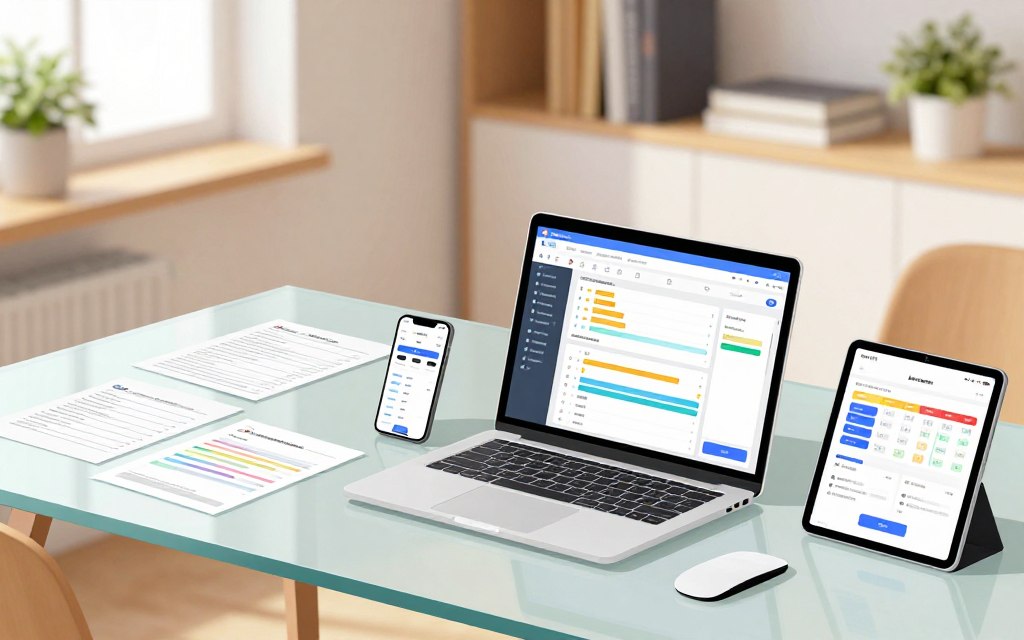
Most major platforms include built-in tools. Use their time tracking, milestone setting, and file sharing. This avoids switching to external apps unnecessarily.
Streamlining Your Workflow
Your workflow needs dedicated blocks. Schedule time for messages, submissions, and status updates. This simple process saves hours.
Time management is critical. Missing one deadline hurts your reputation everywhere. I’ve learned to confirm all details upfront.
Communication clarity prevents most problems. Some platforms require all chat internally for payment protection. Others allow direct contact. Know the rules to avoid penalties.
For personal tracking, centralize everything. Tools like Trello or Notion help when you’re handling work from several sites. See how platform features compare:
| Platform | Built-in Time Tracking | Integrated Workspace | Communication Rules |
|---|---|---|---|
| Upwork | Yes | Yes | Must stay on platform |
| Fiverr | Limited | Basic | Direct contact allowed |
| Niche Platforms | Varies | Often no | Check each site’s policy |
Build efficient processes for repetitive tasks. Client onboarding and final delivery should be smooth. This grows your business sustainably.
Understand the team dynamic. Some clients want independence. Others expect frequent check-ins. Adapt your management style for each project.
Achieving Cost Savings in Freelance Advertising
I learned about platform fees the hard way—by seeing my expected payment shrink. That $500 project quickly became $400 after commissions. Then transaction costs took another bite.
True savings come from understanding every charge. You must factor them into your pricing from the start.
Avoiding Hidden Fees and Overheads
Read the fine print. Some sites charge just to submit proposals. Upwork’s “connects” cost money.
Payment processing often adds 2-3% on top of platform cuts. See how major platforms compare:
| Platform | Fee Structure | Key Consideration |
|---|---|---|
| Upwork | 5% – 20% sliding scale | Rewards long-term client relationships |
| Fiverr | 20% flat commission | Simple but high for low-price gigs |
| Other Marketplaces | Varies (0% – 20%) | Always check for proposal costs |
Knowing this prevents ugly surprises. It protects your business margins.
Maximizing Your Return on Investment
The way to win is simple. Price your services so fees don’t push you below market rates.
Calculate your true hourly rate after all deductions. This is real business success.
Escrow payment protection is worth the commission. Getting stiffed costs you 100%, not 20%.
Never take clients off-platform to avoid fees. It violates terms and risks your account.
Smart pricing and full cost awareness ensure every project is profitable. Your payment should reflect your true value.
Balancing Quality and Budget for Services
Sifting through dozens of profiles to spot real talent tests any client’s patience. You want great work without overspending. This balance is the core of smart hiring.
I’ve reviewed hundreds of candidates. Top talent often gets buried. Beginners with low rates flood applications. Finding the right person takes a focused strategy.
Identifying Qualified Freelancers
Real vetting means looking beyond star ratings. Check actual work samples and read detailed reviews. How does the candidate communicate in their proposal?
Quality professionals charge accordingly. An offer to build a full website for $50 is a major red flag. You truly get what you pay for.
Expect to review 20-50 profiles to find just 2-3 worth interviewing. This is normal. Platform verification helps, but skills listed don’t always match real experience.
Ask specific questions about their process. Request samples relevant to your industry. This extra step separates true experts from the crowd.
Negotiating Fair Rates and Terms
Understand the market range. On the same platform, rates can vary wildly. A job title might show freelancers from $15 to $150 per hour.
Negotiating fair rates respects that better work costs more. It also delivers superior results. Clear communication from the start sets the tone.
The best talent asks clarifying questions before quoting. They set realistic timelines. They don’t promise everything instantly.
Use this comparison to guide your hiring decisions:
| Trait | Beginner Candidate | Expert Professional |
|---|---|---|
| Rate Range | $15 – $30/hour | $75 – $150+/hour |
| Availability | Often immediate | May require scheduling |
| Communication | Generic proposals | Asks detailed questions |
| Portfolio Depth | Limited or generic samples | Targeted, relevant work |
Patience in the hiring process pays off. Investing time upfront to find qualified freelancers saves money and stress later. Your project’s success depends on it.
Leveraging Analytics and Client Reviews
Behind every successful profile lies a treasure trove of data that smart professionals use to win more work. Your star rating is just the start.
Most platforms display your success score, completion rate, and average response time. This gives companies quick, hard numbers to check your reliability.
Client reviews are your most valuable asset. A five-star rating with detailed feedback builds instant trust. You must actively request this feedback after every project.
Your profile analytics show which proposals get views. You see which skills get searched most. This access helps you optimize based on what actually drives interest.
Algorithms favor profiles with consistent positive reviews. One bad rating among ten good ones still raises a red flag for cautious companies.
Marketing yourself effectively means showcasing your best feedback. Your experience rating matters as much as your technical skills. Clients want to know you communicate well and deliver on time.
Your reputation is now quantified. Use that to your advantage.
Use this access to performance metrics. It turns guesswork into a strategic marketing plan. The right client will find you through proven results, not just promises.
Staying Updated on Freelance Trends
The freelance world doesn’t stand still—what worked last year might be obsolete today. By 2027, independent professionals will represent over half the U.S. workforce. This isn’t a side trend. It’s a fundamental shift in how companies operate.
Your long-term success depends on anticipating changes, not just reacting. The market grows at 17.7% annually. Nearly all employers plan to hire this talent in 2025. You must position yourself where the demand is heading.
Monitoring Platform Changes
Major platforms constantly tweak their algorithms and fee structures. A small update can tank your profile’s visibility overnight. I’ve seen it happen.

New niche sites launch regularly, targeting specific industries. Being an early adopter on these platforms gives you less competition. It’s a smart marketing move.
Your expertise must evolve too. Jobs like AI prompt engineering didn’t exist five years ago. Expanding your skill set opens higher-paying jobs with forward-thinking businesses.
Follow industry blogs and community discussions. This gives you early access to trends before others catch on. Watch which sites invest in trust and payment protection—they attract better clients.
Smart marketing means understanding which platforms are growing. Don’t waste effort on declining sites. Adapt your profile keywords and proposal strategies as search algorithms change.
This proactive access to information is your edge. It turns market shifts into new opportunities for your expertise.
Conclusion
Let’s wrap this up: the right platform strategy transforms your talent into a sustainable business. The independent economy isn’t slowing down. With millions joining each year, your moment is now.
This guide showed you a full range of options. Your success hinges on matching your specific expertise to platforms where ideal clients look. It’s less about being everywhere and more about dominating a few key spaces.
Test different sites initially. Track which ones generate real conversations and projects. Then, focus your energy on building strong profiles there. Your reviews and visibility will grow.
Remember, business success as an independent professional combines skill with smart positioning. You have the flexibility to adapt as the market evolves. Take control of your journey today.
